
Dmytro is already earning his own money. This summer, he learnt how to manage it
At 14, Dmytro earns his own money. At Smart Money Camp, supported by the Kredobank Foundation, he practised budgeting, building savings and setting financial goals through real-life scenarios, and identified habits to use afterwards.
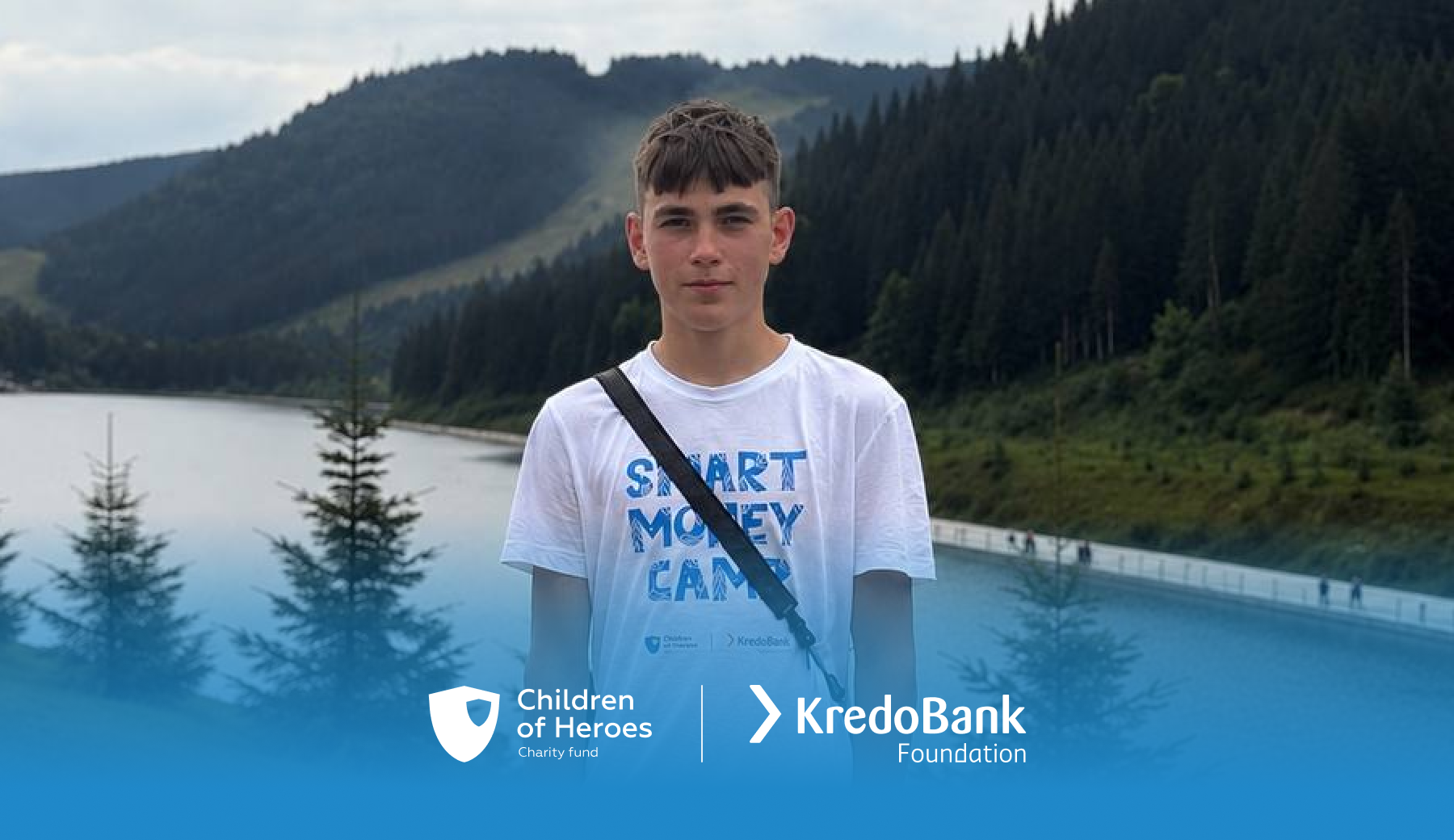
At 14, Dmytro already knows what it means to earn his own money. He lives in the Kyiv region and has had his first experience of working in a restaurant. With his first earnings came new questions: how much can he spend now, how much should he save, and how can he put money aside for something he really wants?
That is why, when asked why he wanted to attend Smart Money Camp, Dmytro gave a very specific answer in his application video: “I dream of going to the camp so I can learn how to manage my money and use it wisely.”
During the teenage years, money gradually becomes part of independent life. Young people start making their own purchases, using bank cards or earning their first income. With this comes the need to make their own decisions: whether to spend or save, how to manage a limited amount of money, and how long it might take to save for a larger purchase.
OECD data shows just how early these decisions begin. Across the countries and economies that participated in the PISA 2022 financial literacy assessment, around 60% of 15-year-olds had a bank account and/or payment card, while more than 85% had bought something online during the previous 12 months. At the same time, 18% of students did not reach the baseline level of financial literacy. Those with higher financial literacy scores were more likely to save money and compare prices before making a purchase.
Financial literacy at this age provides practical tools for decisions that will become more frequent as young people grow older: how to plan a budget, build savings, assess risks and set financial goals. For children who have lost one or both parents as a result of the war, these skills are an important part of preparing for independent adulthood. Some become involved in their family’s financial decisions earlier than their peers.
For Dmytro, these questions are already part of everyday life: he earns money, has his own expenses and has goals he wants to save towards. This summer, he had an opportunity to explore these decisions in practice at Smart Money Camp, organised by the Children of Heroes Charity Fund with the support of the Kredobank Foundation.
Seven days of financial decisions
Over seven days, Dmytro and the other participants learnt how to manage money through situations modelled on real life. Working in teams, the teenagers created a fictional character with a job, an income and a financial goal. They then planned the character’s budget, built an emergency fund, worked with savings and investments, and developed a business idea.

This allowed the participants to see the consequences of their decisions in a learning environment. Spend too much — revise the budget. Fail to account for a risk — find another solution. Set a financial goal — calculate how much time and money it will take to achieve it. A mistake became an opportunity to reconsider a choice and try a different approach.
The programme also included a psychological component. The teenagers explored their own personal resources, ways of supporting themselves in difficult situations, communication and relationships with their peers. Individual sessions with a psychologist were also available when needed.
What Dmytro took away from the camp
At the beginning, Dmytro said he wanted to learn how to manage the money he earned. After seven days, he could already identify specific things he planned to do differently.
In the final survey, Dmytro rated his confidence in making financial decisions at 4 out of 5 and his interest in financial literacy at 5 out of 5. Among the skills he plans to use after the camp, he named managing his own budget and making a habit of setting aside part of what he earns.
Those savings now have a specific purpose: Dmytro is saving for some tech and a larger purchase he plans to make in the future.
At 14, the sums and decisions involved may still be relatively small. But Dmytro is already learning to plan his resources, balance what he wants with what he can afford, and save towards a specific goal. As he grows older, the number and complexity of financial decisions he faces will increase — and he has already started building the experience to make them.

We thank the Kredobank Foundation for its partnership and support of Smart Money Camp.
Through this partnership, teenagers had the opportunity to practise financial skills in real situations: planning, calculating, reviewing their decisions and gradually developing habits that will help them as they become more independent.
