

Children of Heroes Fund’s Education Program in the UK
When war threatens to take away not only children’s loved ones but also their belief in the future, education becomes a source of stability. It restores confidence, opens new opportunities, and helps children believe in their dreams again.
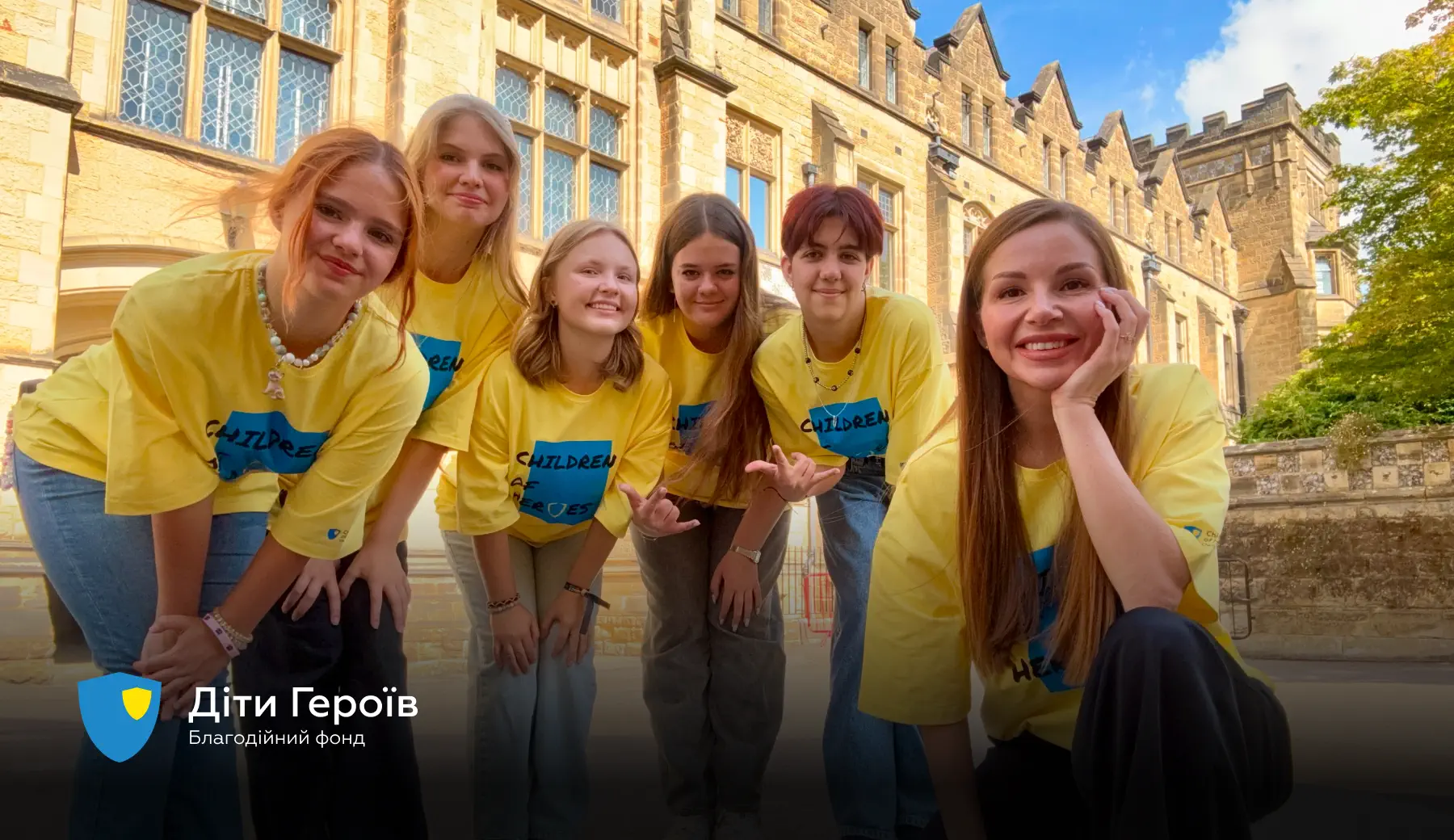
When war threatens to take away not only children’s loved ones but also their belief in the future, education becomes a source of stability. It restores confidence, opens new opportunities, and helps children believe in their dreams again.
With this goal in mind, the Children of Heroes Charity Fund, together with its partner, Brightseeds, has been running an educational programme in the United Kingdom since 2023. This summer, the initiative became the largest in the Foundation’s history: 121 teenagers were given the opportunity to spend two weeks studying at British schools, immersing themselves in an English-speaking and multicultural environment, experiencing a different educational system, and broadening their horizons.
In this interview, Valeria Abdal, Co-founder and Ambassador of the Children of Heroes Charity Fund, shares how the programme came to life, why it goes far beyond learning English, and how education helps children rediscover confidence in themselves.
How did the idea for this programme emerge? How long did the preparation take, and what was the biggest challenge?
Preparations for this year’s programme began more than six months in advance. Back in December, we opened applications for our beneficiaries to take part in summer educational programmes at schools across the United Kingdom.
We received around 200 applications, even though we had places for only 120 children.
The selection process was multi-stage. We assessed each applicant’s English proficiency through language tests, required every candidate to record a video introduction in English, and asked them to write an essay. Our experts personally reviewed every video and every essay. It was important for us to give this opportunity to children who were genuinely motivated to learn, grow, and make the very most of this experience.
Another important stage was an interview with our psychologists. We wanted to make sure that every child was emotionally prepared for an intensive two-week programme abroad, a completely new environment, and the many experiences that would come with it.
Perhaps the hardest part was selecting only 120 children from such a large pool of applicants. Every application represented a unique personal story, so making those decisions was incredibly difficult.
The logistical side was equally challenging. Every child needed a UK visa, appointments at visa application centres had to be arranged, documents prepared and translated, and all guardian permissions collected. It was an enormous amount of work that our team carried out over several months.
How many children took part in the programme this year?
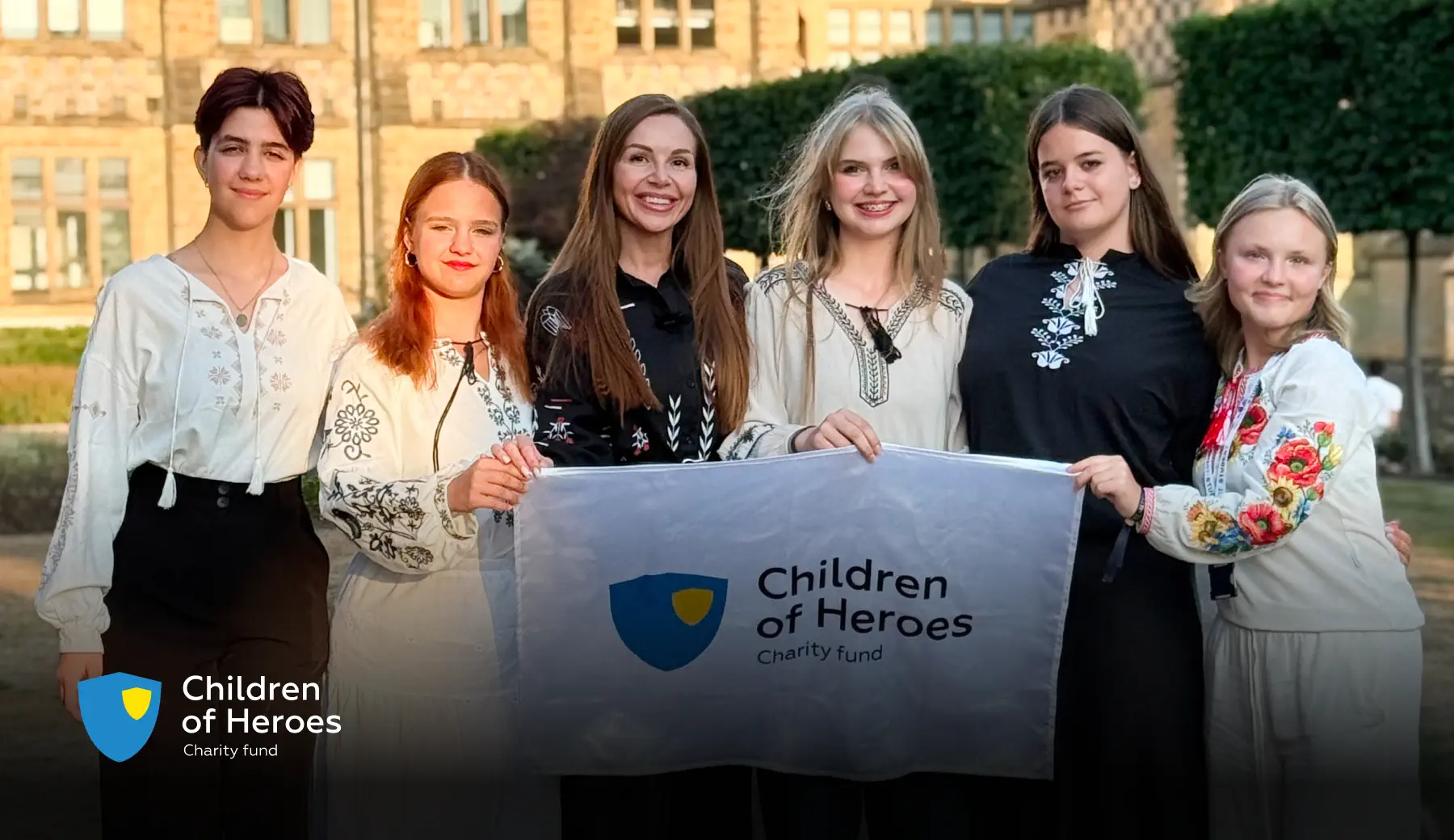
This year, we set ourselves an ambitious goal: to send 120 beneficiaries to study at British schools. In fact, we slightly exceeded that target. This summer, 121 children had the opportunity to study at 12 different schools across the United Kingdom, fully immersing themselves in an English-speaking environment and learning directly from native English-speaking teachers. The participants are teenagers aged 12 to 18 from across Ukraine — from large cities, small towns, and rural communities. What they all have in common is a desire to learn, grow, and build their future.
What was the main objective of the programme? Can you already see the results?
We will be able to fully evaluate the programme once it concludes, after speaking with the children, gathering feedback from the schools, and analysing the overall experience. However, our primary goal was to create a safe, inspiring educational environment where children could improve their English through full language immersion, gain new knowledge, make friends from different countries, and, most importantly, regain confidence in themselves and their abilities.
It was equally key to give them positive memories and meaningful experiences that they will carry with them for the rest of their lives.
What did the educational, cultural, and extracurricular programme include?
Each British school has its own curriculum, so every programme differs depending on the region. Over the years, our beneficiaries have studied at schools near London, Oxford, Manchester, Canterbury, in southern England, and in many other parts of the country.
Alongside their daily English lessons, the children took part in a wide range of sports, creative workshops, team-building activities, competitions, and social events. These included bowling, escape rooms, swimming, tennis, various sports, and evening activities—all conducted in English.
Educational excursions are also an essential part of every programme. The children visited London, Oxford, Cambridge, Bath, and other historic British cities, where they explored local culture, architecture, and traditions.
This year, I personally accompanied our beneficiaries at Tonbridge School. Together, we visited London, Oxford, and Windsor.
What has the children’s response been to studying at British schools?
Without exaggeration, I can say that the children’s impressions have been incredible. For some, it was their very first trip abroad. For others, it was their first experience studying in an international environment. Many had never imagined what education in a British school was like or how different it could be from what they were used to in Ukraine. Sixteen-year-old Viktoriia told me: “My English has improved because there are so many international students here, and we communicate with both them and our teachers in English. We studied alongside young people from many different countries, and it was fascinating to learn more about their cultures, languages, and traditions.” Seventeen-year-old Polina shared her experience of studying engineering and design: “At my British school, I enrolled in an Engineering and Design course. We learned how to design structures that could benefit people in the future. It was incredibly exciting!”
For many of the children, the programme also provided something equally important: the opportunity to spend two weeks in a safe environment—free from air raid sirens and the constant stress of war. It allowed them to focus entirely on learning, practise English with native speakers, and simply enjoy being ordinary teenagers. For some, it was also a lifelong dream come true: observing Big Ben, roaming through the streets of London, or visiting Oxford for the very first time.
You spent time with the children at Tonbridge School. What impressed you most about the educational approach?
The children themselves repeatedly told me that it was one of the strongest and most engaging educational programmes they had ever experienced.
Before the programme began, every participant selected an academic pathway based on their interests. The options included Leadership and Global Economy, Artificial Intelligence, Engineering, and others. They were then assigned to small international groups, where they spent two weeks learning alongside students from around the world.
What impressed me most was the teaching methodology. For example, in the Leadership course, the instructor did not simply deliver lectures. Instead, the classes were built around the case study method—learning through the analysis of real-life and business scenarios. Students were presented with real challenges, discussed them in teams, analysed different perspectives, defended their ideas, searched for compromises, and ultimately presented their own solutions. This approach develops far more than subject knowledge. It strengthens critical thinking, communication, teamwork, and leadership skills—the very competencies that are becoming increasingly essential in today’s world.
The engineering classes were equally inspiring. One of our girls told me that they spent almost an entire week studying the principles of rocket engineering. But it wasn’t just theory. The students designed and built their own model rockets before launching them using an electric launch system. For the children, it was an unforgettable hands-on experience that allowed them to engage with science in a truly practical way.
It was precisely this combination of theory and practice—experiments, discussions, teamwork, and real-world application—that excited our beneficiaries the most. Perhaps that is why they returned from every class inspired, eager to learn more, and unafraid to set ambitious goals for themselves.
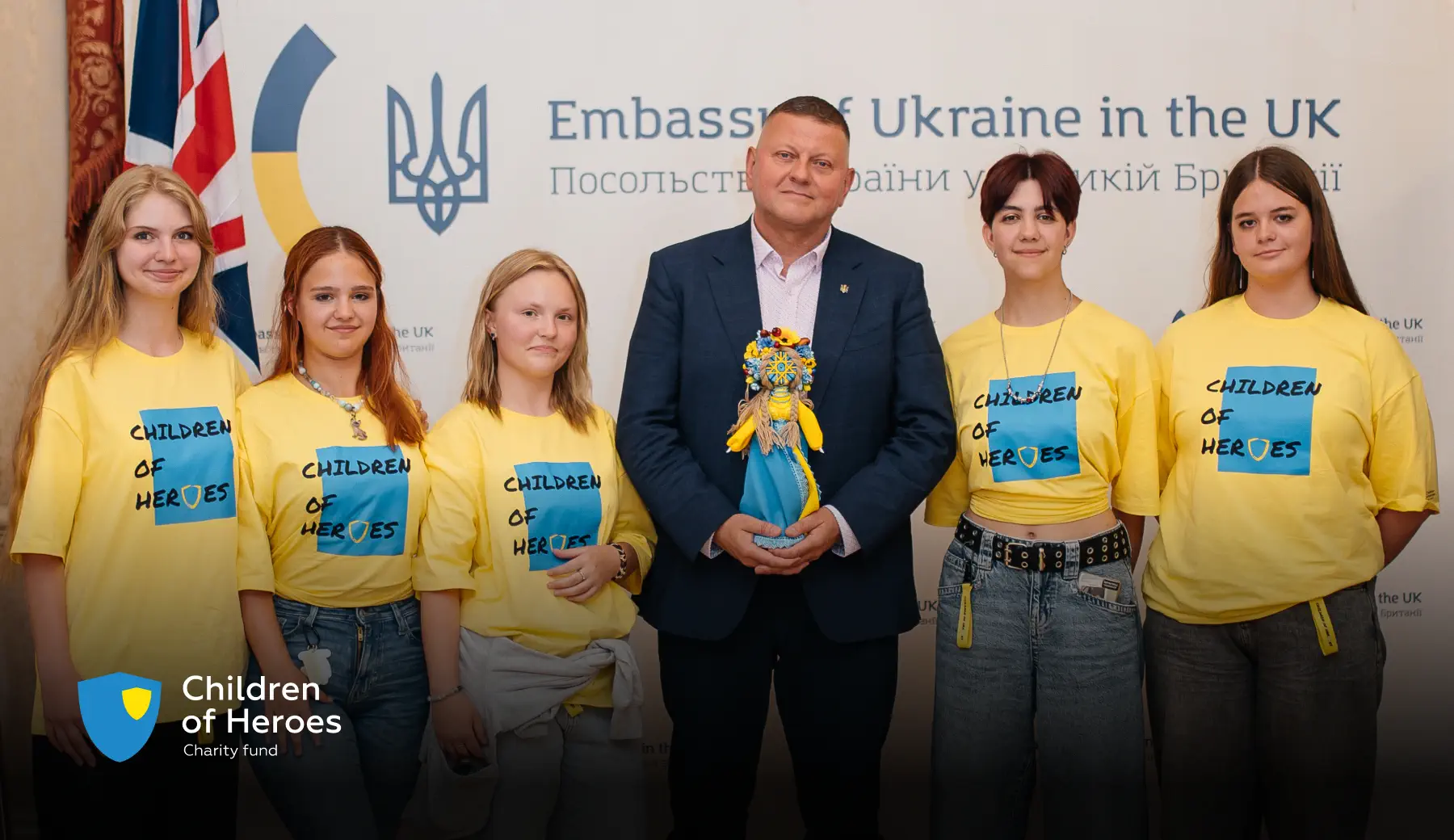
One of the highlights of the programme was meeting Valerii Zaluzhnyi, Ukraine’s Ambassador Extraordinary and Plenipotentiary to the United Kingdom. What was that experience like?
It was an incredibly warm, sincere, and truly memorable meeting. We were welcomed at the Embassy of Ukraine in the United Kingdom, where we spent nearly an hour talking with Ambassador Valerii Zaluzhnyi. What impressed me most was that Mr. Zaluzhnyi had taken the time to learn the story of every child who attended the meeting beforehand. He knew their names, understood what each of them had been through, and addressed every child personally.
The conversation was open and relaxed. He asked the children about their dreams, future plans, studies, and career aspirations. He shared his own life experiences, answered their questions, offered advice, and gave words of encouragement.
I am certain that, for many of our beneficiaries, this became one of the defining moments of the entire trip. For many of them, it was a rare opportunity to speak with someone who has become a symbol of Ukraine’s resilience and determination. What was especially touching was that Mr. Zaluzhnyi had prepared a small personal gift for every child. It was a heartfelt gesture that once again reflected his genuine care and attention toward them.
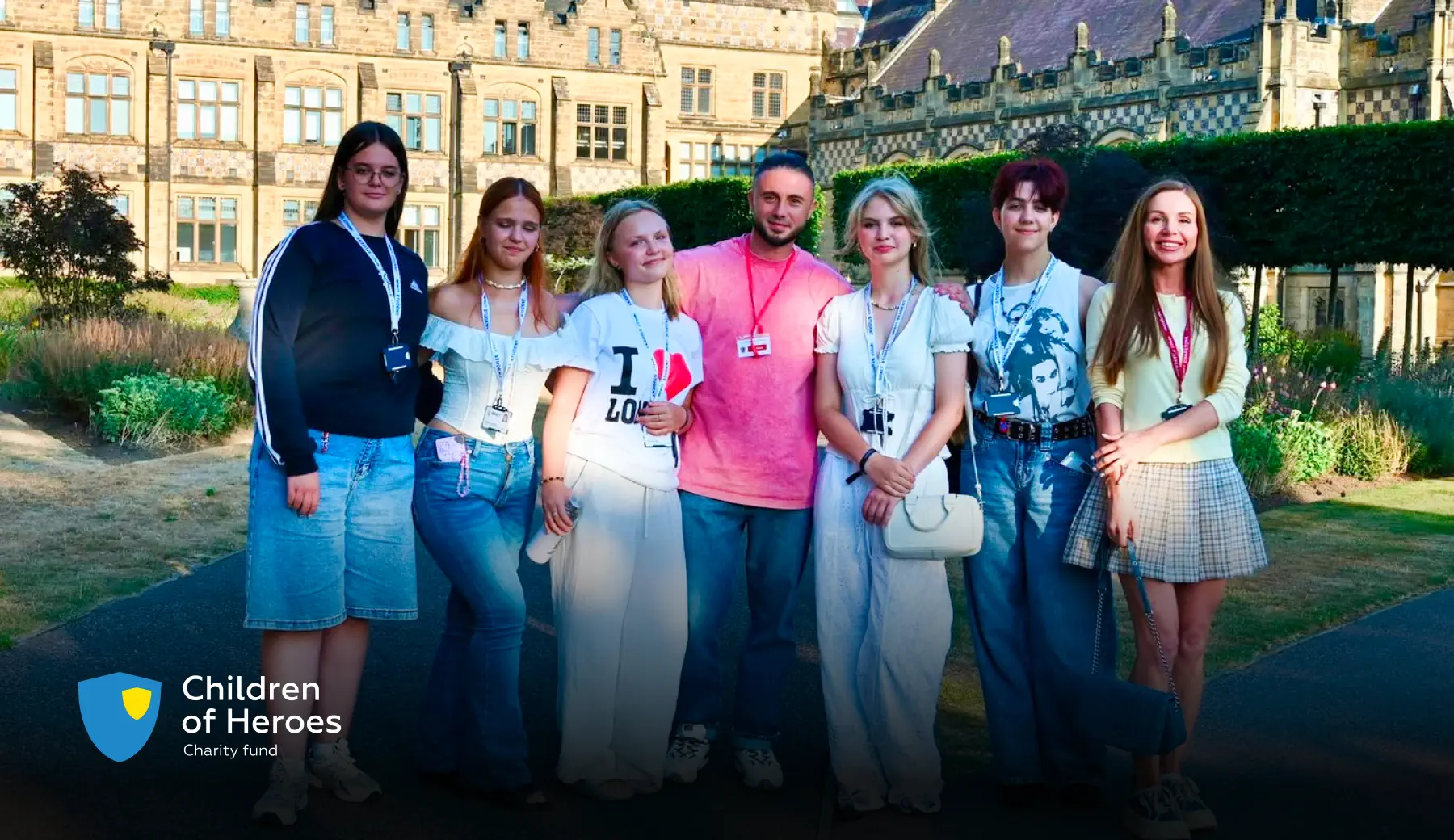
Musician Taras Topolia also joined the programme. What role did he play?
Taras Topolia serves as the Education Ambassador of the Children of Heroes Charity Fund. His support goes far beyond raising awareness or lending his public profile to our work. He personally takes part in our educational initiatives, and that means a great deal to us.
Earlier this year, in April, Taras accompanied our beneficiaries during their educational trip to the United States. For two weeks, he visited universities alongside the children, spent time with them, encouraged them, and became a genuine part of their journey. This summer, he travelled to the United Kingdom to see first-hand how our children study in British schools. He visited Tonbridge School and Dean Close School near Oxford, met with students and teachers, and learned more about how the programmes are delivered.
For our beneficiaries, this kind of support is incredibly meaningful. They see that well-known Ukrainians do more than simply speak about supporting children—they make time to be with them personally, celebrate their achievements, and inspire them through their own example.
That gives our children greater confidence in themselves and motivates them to keep moving forward.
During the visit, the Fund also hosted a charity luncheon in London. What was its main purpose?
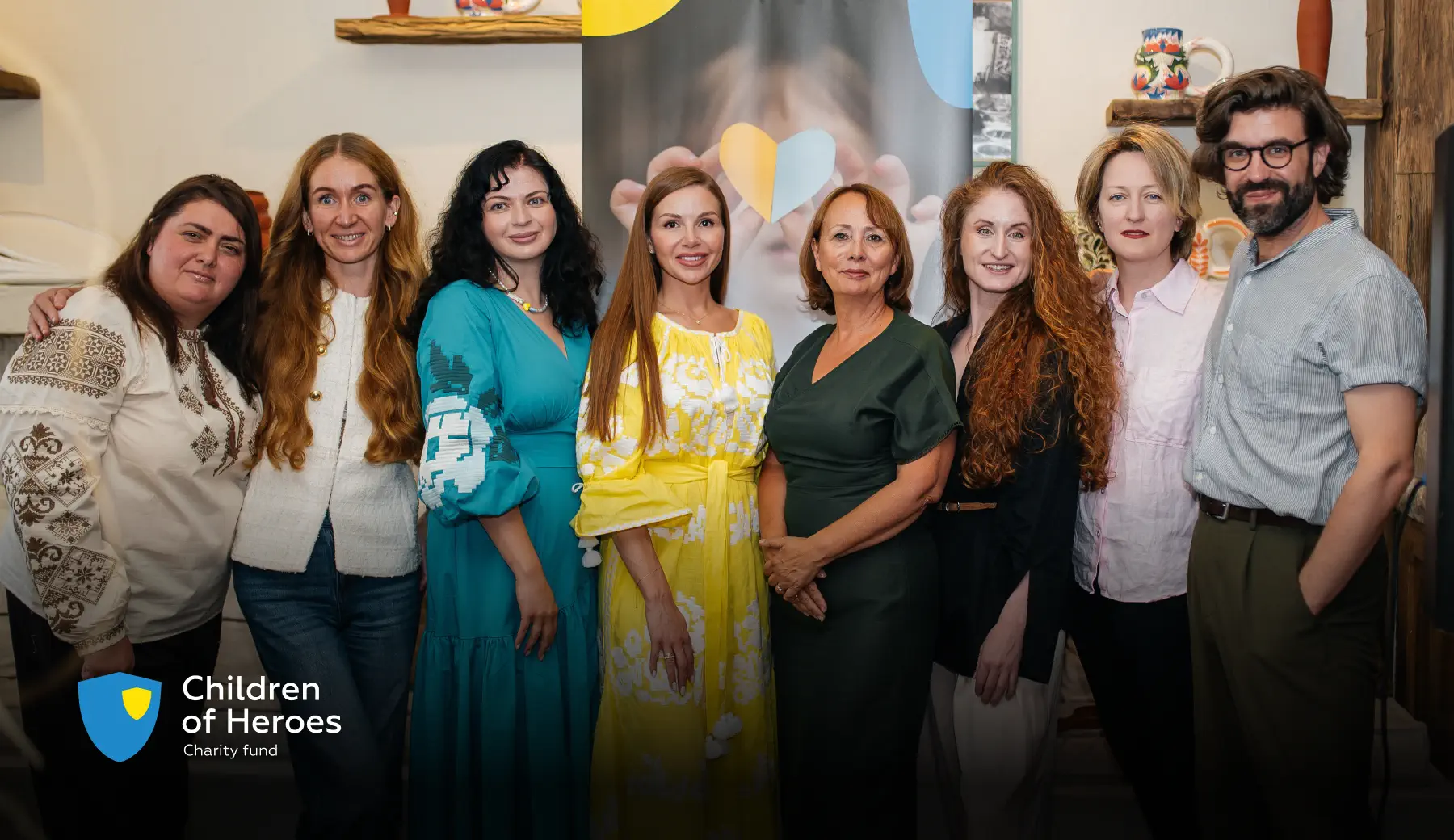
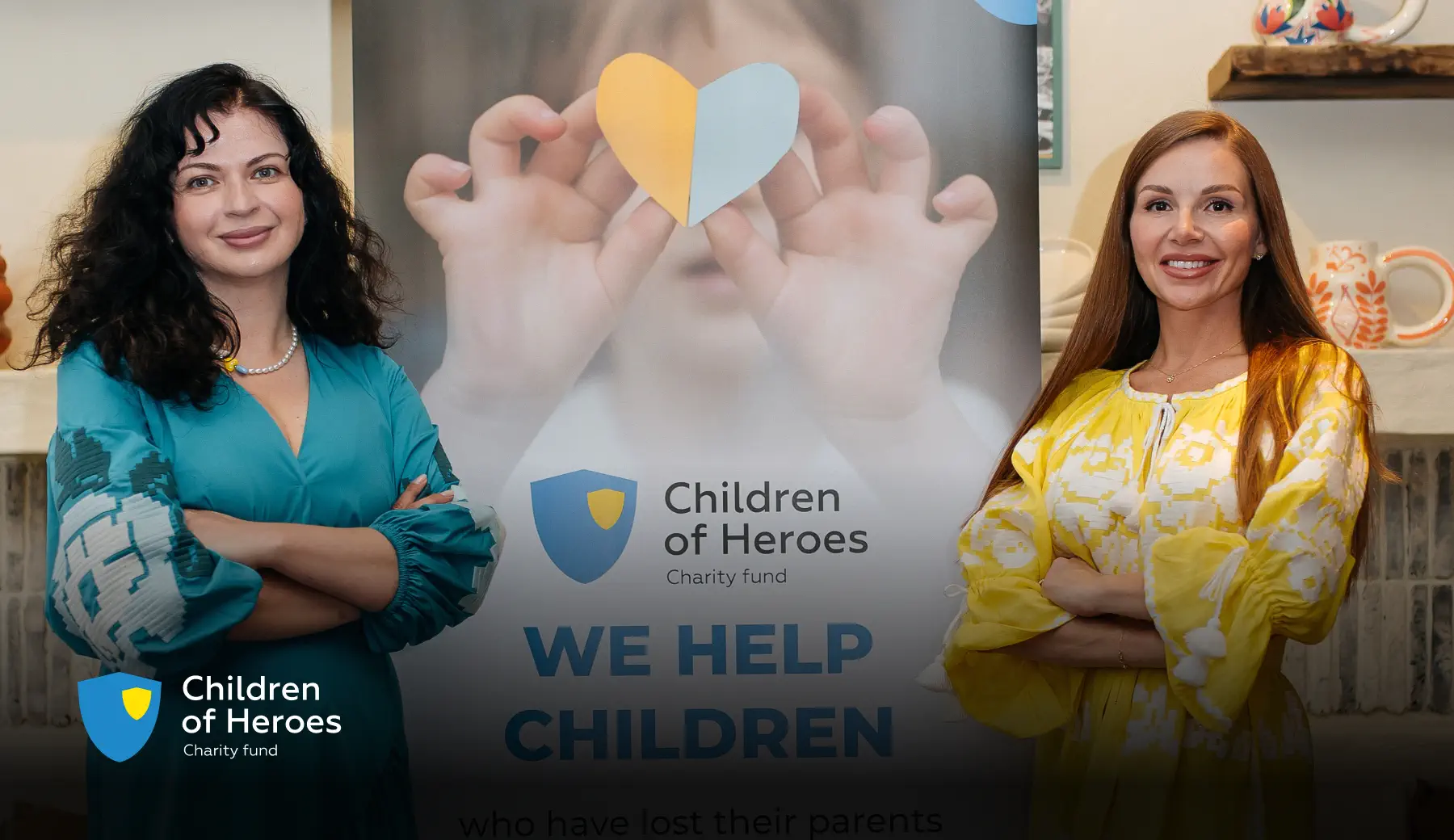
Hosting a charity event in London was an exciting challenge for us. It meant reaching a new audience in a new setting, and we wanted to create more than just a formal gathering. Our goal was to bring people together around a shared purpose: supporting Ukrainian children who have lost one or both parents to the war.
We invited our long-standing partners, prospective donors, representatives of British schools that already host — or look forward to hosting — our beneficiaries, representatives of Ukrainian charitable organisations in the United Kingdom, universities, and friends of the Fund.
It was symbolic that we chose Tatar Bunar, a Ukrainian restaurant in London founded by a Ukrainian restaurateur, as the venue. We wanted our guests to experience not only the Foundation’s mission but also the warmth, hospitality, and spirit of contemporary Ukrainian culture.
I believe we achieved everything we had set out to do. The event was warm, heartfelt, and genuinely memorable. It gave us the opportunity to share the Foundation’s mission, present the impact of our work, and introduce our guests to the personal stories of the children we support.
The most emotional part of the afternoon was hearing directly from the children themselves. They spoke about their journeys, their dreams, and the opportunities they have received thanks to the Foundation’s support. One of our beneficiaries performed Volodymyr Ivasiuk’s iconic song, creating one of the most moving moments of the event.
The highlight of the luncheon was a performance by our Education Ambassador, Taras Topolia, lead singer of the Ukrainian band Antytila. He addressed the audience and performed several of the band’s best-known songs, creating an atmosphere of unity, warmth, and solidarity.
We sincerely hope this event marks the beginning of a stronger and more active presence for the Fund in the United Kingdom. Building new partnerships, raising awareness of our work, introducing the international community to the stories of our children, and engaging more people in supporting Ukrainian families remain key priorities for us.
What comes next? What are the Fund’s plans for the future of this programme?
Our motto is: “The best is yet to come,” Valeria smiles. We are determined to give even more of our beneficiaries the opportunity to study in the United Kingdom next year and discover new educational pathways. Of course, programmes like these require significant financial resources. That is why our team works every day to strengthen international partnerships, engage new donors, and create more opportunities for the children we support.
But our goal goes far beyond organising a single educational trip. We want to stand by these children in the long term – to support their education, help them discover and develop their talents, open new doors, and encourage them to dream boldly without being afraid to pursue ambitious goals.
We firmly believe that education is one of the most meaningful investments in Ukraine’s future. And as long as our children continue to dream, we will do everything in our power to help them turn those dreams into reality.
