Home / Humanitarian aid vs. long-term child support: what children in Ukraine need after loss
Humanitarian aid is the first response during a crisis. When a child faces sudden loss – the death of a parent, forced displacement, or destroyed housing – emergency support helps stabilize daily life quickly.
For children affected by the war in Ukraine, humanitarian aid often includes:
In October 2025, the Children of Heroes Charity Fund conducted a survey among 2,147 families who lost one or both parents due to the war. The results show how acute humanitarian needs remain even long after the initial emergency. Among surveyed families, 36.2% identified high prices for basic necessities as their primary difficulty, while 13.2% reported a lack of stable income.
This kind of humanitarian support is necessary and often immediately life-changing for children and their guardians. That is why in 2025, Children of Heroes delivered more than 322 tonnes of humanitarian aid to families across Ukraine.
However, emergency relief addresses only the first stage of a child’s healing and stability. Child welfare beyond emergency relief requires long-term psychological, educational, medical, and social support focused on trauma recovery for children affected by the Ukraine war.
Each stage of childhood brings different needs. Child welfare beyond emergency relief depends on long-term psychological, educational, and social support that continues throughout childhood.
In the immediate aftermath of loss, humanitarian support and psychological care help a child regain a basic sense of safety and stability. But within months, many children return to school struggling to concentrate, falling behind academically, and trying to understand how their lives changed so suddenly. Later, they must navigate adolescence, relationships, and future planning without the parent they lost.
Each stage of childhood brings different emotional and developmental needs. Emergency aid stabilizes the immediate crisis, but it cannot support a child through every stage of development.
Grief after the loss of a parent, especially in wartime Ukraine, does not disappear within weeks or months. Research by UNICEF and other organizations consistently shows that children who lose a parent face increased long-term risks of depression, anxiety, social difficulties, and disrupted emotional development. Without ongoing psychological support for children who lost a parent, these challenges often deepen over time.
Children of Heroes provides individual consultations, group therapy, educational events, camps, and socialization activities. The goal is not only crisis stabilization, but helping children of Ukrainian Heroes build emotional resilience and long-term stability.
Displacement, emotional stress, and instability leave many Ukrainian children significantly behind in their studies. Research estimates that children in Ukraine have lost at least two years of learning since February 2022, with the long-term cost of these learning losses now estimated at approximately USD 7.8 billion.
For children who have also lost a parent, catching up often requires targeted educational support, access to learning tools, and career guidance.
Without sustained support, educational gaps widen and opportunities narrow. This highlights the long-term impact of child support programs in helping children rebuild stability and future opportunities.
Children of Heroes combines humanitarian assistance with comprehensive child support in Ukraine. Beyond emergency aid and case management, the Fund provides ongoing psychological, educational, medical, and social support for children who have lost one or both parents due to the war in Ukraine.
This program helps children and their guardians manage grief, emotional stress, and the long-term psychological effects of war. Many children experience anxiety, behavioral changes, social withdrawal, or difficulties processing the loss of a parent. Guardians, in turn, often need support and guidance while coping with their own grief.
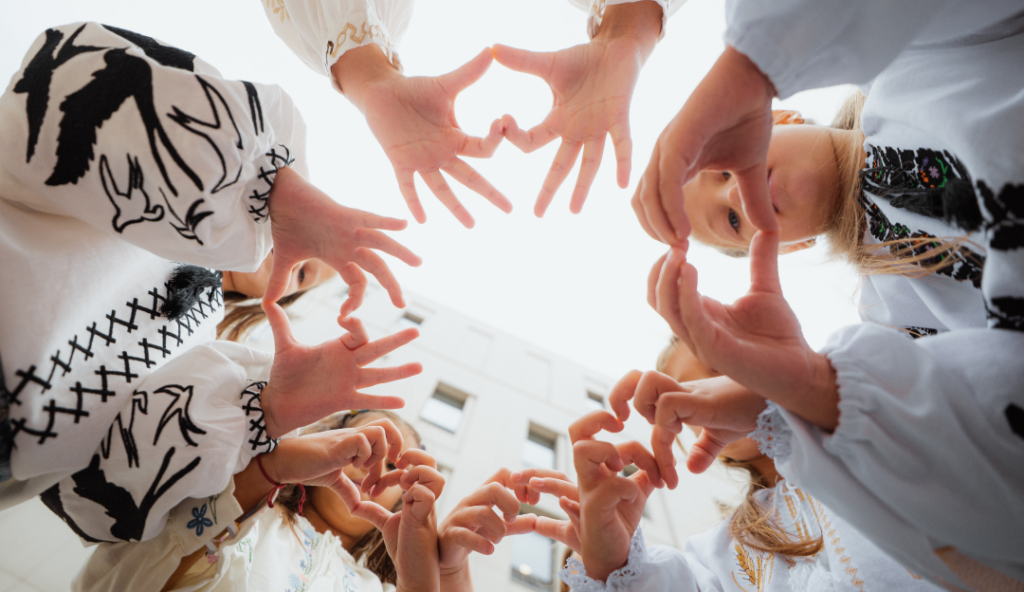
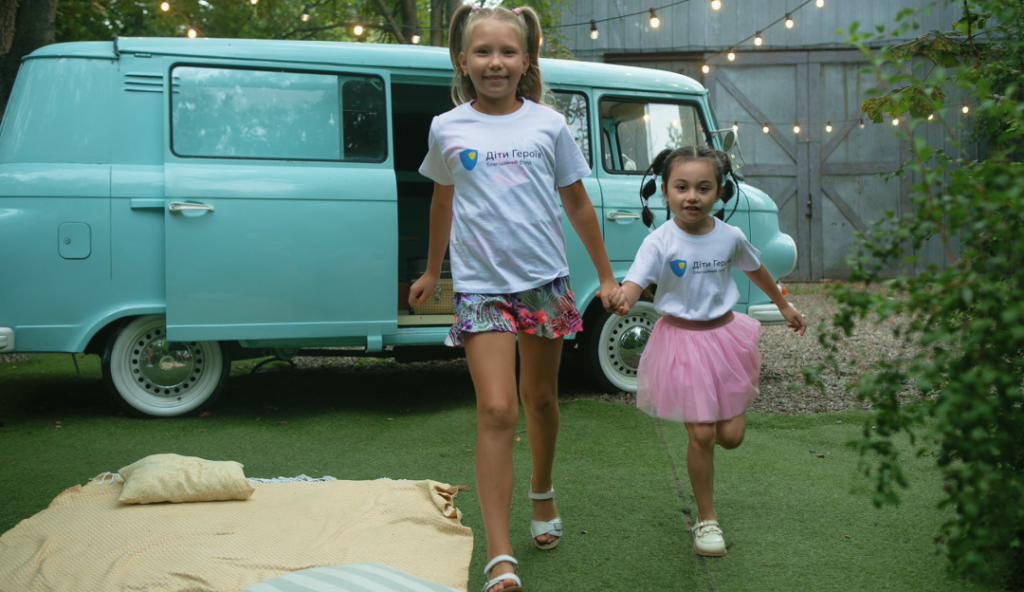
Children of Heroes provides individual psychological consultations, group therapy, educational events, camps, and year-round socialization activities. Concerts, workshops, sports, and creative events help children who lost parents in Ukraine rebuild emotional stability, restore peer connection, and experience some of the ordinary joys of childhood again.
In 2025, the Fund delivered 15,511 individual consultations. A total of 2,009 people received individual psychological support, including 1,084 children and 925 guardians.
This program helps children continue learning and build toward their future. Beneficiaries can access tutoring in school subjects, foreign language learning, preschool preparation, IT and programming courses, creative classes, and career guidance.
The Fund also provides devices and other tools to ensure continued access to online learning and long-term education support for children of war victims.
Since March 2022, the Fund has delivered over USD 4,236,022 in educational assistance and more than 1,319,173 hours of educational support.
Long-term child support includes ongoing healthcare needs that extend far beyond emergency medicine. Children of Heroes connects families with trusted clinics, supports access to diagnostic testing, provides vitamins and first-aid kits, and offers annual medical insurance for the most vulnerable children.
Ophthalmology is one of the program’s dedicated focus areas, with regular access to eye examinations, glasses, contact lenses, and vision care. The program also includes health education for guardians, helping families better support children’s physical well-being at home.
Every family that joins the Fund is assigned a dedicated Family Helper – a trained specialist who becomes their primary point of contact. Family Helpers assess each family’s needs, create individualized support plans, coordinate access across programs, and remain in regular contact with families over time.
Depending on the situation, communication may take place weekly, monthly, or quarterly. This continuity of care is one of the main differences between long-term child support and one-time humanitarian assistance.

Humanitarian support for children stabilizes the immediate crisis. Long-term support helps them continue developing beyond it.
For children who have lost a parent in the war in Ukraine, long-term support can influence nearly every stage of development: emotional recovery, school performance, social relationships, health, confidence, and future opportunities. Without sustained support, the effects of grief, instability, and educational disruption often deepen over time.
For more than 16,000 children currently in the care of Children of Heroes – children who will spend years growing up in the aftermath of loss – the long-term commitment is what will matter most.
You can support organizations that provide both emergency and long-term assistance to children in Ukraine. Children of Heroes Charity Fund accepts one-time donations, monthly contributions, and is open to corporate partnerships.
Monthly giving is particularly impactful because it funds the long-term programs – psychological support, education, and medical care – that children need over years, not just in moments of crisis.
You can donate to Ukrainian children charity through the website: childrenheroes.org/en/
Children of Heroes is a Ukrainian charity supporting more than 16,000 children who have lost one or both parents due to the war. The Fund provides humanitarian aid, individual case management, psychological and socialization programs, educational support, and medical care, following each child from joining the Fund until the age of 18 and beyond.
Humanitarian aid addresses immediate, urgent needs: food, clothing, medicine, and temporary financial support. Long-term child support focuses on sustained development: psychological recovery, education, healthcare, and social growth over months and years. Both are necessary, but they serve different stages of a child’s recovery.
The effects of parental loss in wartime – grief, trauma, educational disruption, and instability – develop over years. Emergency aid stabilizes a family in crisis, but does not address a child’s ongoing psychological, educational, or social needs. Without sustained support, these unmet needs compound over time.
Long-term support programs provide psychological care, educational assistance, healthcare access, and consistent adult contact over the full course of a child’s development. Ongoing support for children of war victims in Ukraine reduces the long-term risks of trauma, educational dropout, and social isolation – and creates optimal conditions for recovery.
З перших днів повномасштабного вторгнення Юрій пішов добровольцем на фронт. На жаль, чоловік загинув під Бахмутом. Ця трагедія стала справжнім ударом для його дружини Галини та двох донечок — 13-річної Таїсії та 11-річної Іринки. Емоційний стан донечок був вкрай нестабільним: вони закрились в собі.
Від фонду «Діти Героїв» сімʼя Найдухів отримала можливість поїхати до табору «Воловець» у Карпатах. Це табір психоемоційної стабілізації для сімей, що постраждали від війни. З перших днів у таборі розпочались позитивні зміни. Вони ходили в гори, малювали, співали, купалися в чанах. Галина каже, що вона вперше після трагедії добре спала. А дівчата, які категорично відмовлялись йти до психолога, після табору самі висловили бажання розпочати роботу з фахівцем!