


How is the culture of charity changing in Ukraine? A perspective from the Children of Heroes Charity Fund
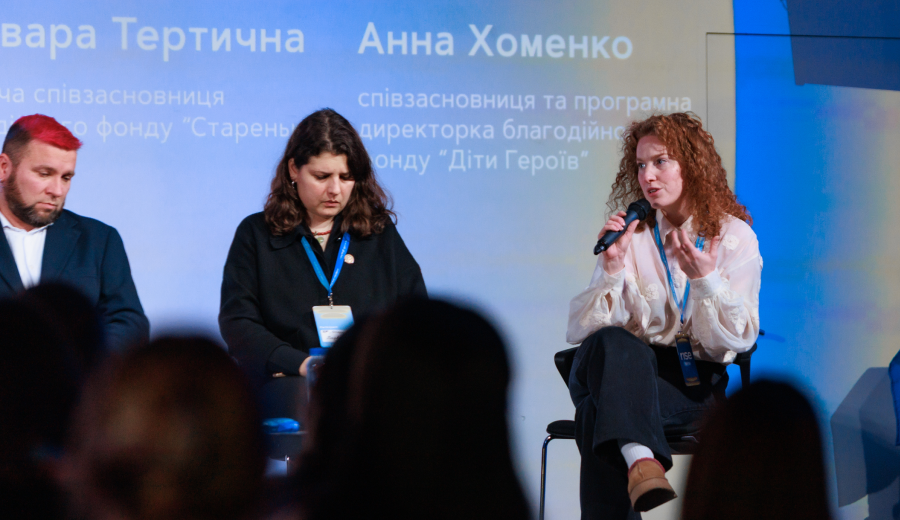
Kyiv recently hosted «RISEverse: a new era of charity» an event that brought together over 200 representatives of charities, businesses, volunteer initiatives, opinion leaders, and activists. The event, organized by the Rise of Ukraine team, focused on how the culture of charity in Ukraine is changing and what will shape its future.
Hanna Homenko, Director of Program Management and Co-Founder of the Children of Heroes Charity Fund, took part in a panel discussion on the future of charity. One of the key questions raised was whether society is becoming used to pain when it hears stories of war and loss every single day. Hanna stressed that the risk of emotional fatigue is very real, and charities must be sensitive to it.
According to her, the mission of charitable organizations is not to lean on pity, but to show a way forward — not only to speak about tragedies, but also to show how support changes the lives of specific children:
– combining difficult stories with real outcomes — successes, achievements, small victories;
– giving people not a sense of guilt, but a feeling of meaningful engagement;
– showing not only «what happened», but also «what we can do together».
In this way, charity stops draining people and instead inspires them to keep going.
«TeenHero»: a space for teenagers and their voices
Hanna also spoke about TeenHero — a TikTok channel run by the Children of Heroes Charity Fund and created entirely by teenagers who lost their parents due to the war. It is a space where they can speak in their own voices, without «filters» imposed by adults, combining emotional healing with opportunities for growth.
During the discussion, Hanna emphasized that for these teenagers, it is much more than just content:
– it is creativity and a sense of control over their own lives — when you film, edit, and experiment with formats;
– it is skill-building — communication, storytelling, production, teamwork;
– it is a way to move from being «a story about loss» to becoming the author of your own story.
The teenagers behind TeenHero are already shaping a new language of charity — honest, direct, and conscious.
The risk of a «lost generation»
The panel also addressed the risk of a so-called «lost generation» if psychological support for children who have lost one or both parents due to the war is not systemic. Hanna reminded the audience that trauma does not disappear on its own. If there are no caring adults, psychologists, and educational opportunities nearby, it goes «deeper» and affects the child’s entire future — their self-esteem, relationships, ability to trust, and ability to build a life.
At the same time, this is not a sentence. Wherever there is systemic support, there are no «lost generations» — there are generations that have grown stronger despite the circumstances. Children do not need pity; they need stability, attention, and the opportunity to learn and talk about their experiences.
This is exactly the kind of support system the Children of Heroes Charity Fund is working on — from psychological assistance to educational programs and long-term case management.
Charity in 2030
Speaking about the future, Hanna Homenko outlined what Ukrainian charity could look like by 2030: more mature, more honest, and closer to people.
Several key points:
- Technology — not for show, but for transparency and rapid assistance. When a person can see in a matter of seconds exactly who they have helped and what impact it had, charity becomes conscious and deeply personal.
- Stories — honest, vivid, and not always dramatic. People are tired of pain; they respond to strength, growth, dreams, and real results.
- Partnerships — between business, the state, communities, and charities. No one can cope alone; real scale is achieved only through joint projects.
- Children’s voices — the generation growing up in war is already different: brave, straightforward, with a strong sense of justice. By 2030, it is these children who will define what help, community, and care mean.
RISEverse became a platform where these ideas were spoken out loud: the children who are beneficiaries today will soon become donors, partners, and leaders of change.
For the Children of Heroes Charity Fund, Hanna’s participation in this discussion is not only about sharing experience — it is also an invitation to partnership. We are open to cooperation with businesses, foundations, and initiatives that share one simple belief: caring for children is not just an emotion; it is a strategy for the future.
