

Supporting children through loss means we have to keep learning ourselves
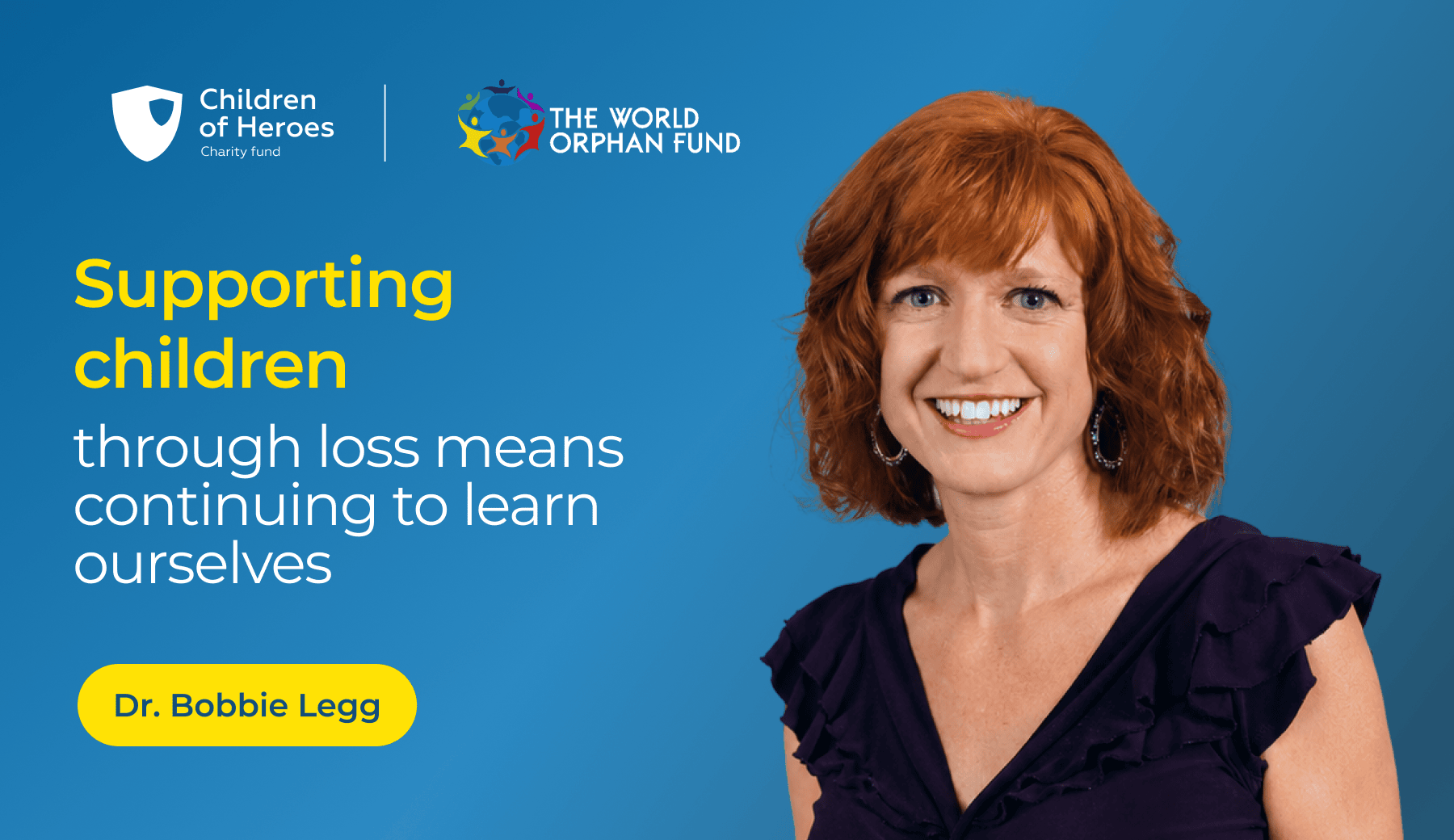
Psychologists and family helpers at the Children of Heroes Charity Fund completed training in evidence-based, trauma-informed approaches with Dr. Bobbie Legg, supported by The World Orphan Fund.
When a child loses one or both parents to war, they need adults around them who understand how trauma affects the mind, behaviour, and a child’s capacity to trust. That understanding does not appear on its own. It has to be acquired, practised and regularly renewed, which is why training the team is an essential part of the fund’s psychological work.
Psychologists and family helpers at Children of Heroes completed a training course with Dr. Bobbie Legg, who holds a PhD in Social Work and works as a clinical psychotherapist. She teaches at the Graduate School of Social Work at Arizona State University in the United States. Her clinical practice focuses on children and adolescents who have survived trauma, loss, and abuse, and her international experience spans South Asia, South America, and Africa. The training was held with the support of The World Orphan Fund.
The course was built around three parts that complemented one another.
Theory — the biopsychosocial model of trauma. The team examined how chronic stress affects a child’s developing mind, emotional responses, and the formation of attachment. A separate theme was ambiguous loss: the experience many Ukrainian families face when a parent is missing, and pain, anxiety and hope exist at the same time, without final answers.
Method — practising specific interventions. Psychologists worked on approaches for children who, because of what they have lived through, withdraw or avoid contact and cannot speak about the loss directly.
Practice — supervision. The team worked through real cases from its practice and, under Dr. Bobbie Legg’s supervision, looked for more precise ways to support particular children and their carers.
What this changes in the fund’s work:
- Psychologists gained methodology and tools grounded in international clinical practice with loss and trauma. Family helpers gained a more precise reading of the emotional states of children and carers, and of how to communicate in a crisis.
- Supervision gave specialists a space where a difficult case does not have to be handled alone. This lowers the risk of burnout and allows the team to remain a stable source of support for children over the long term.
- Psychologists and family helpers developed a shared language, which makes a child’s pathway through support more consistent.
The effects of childhood trauma do not disappear when active fighting ends. Training specialists is therefore a critical condition — without it, quality support cannot hold over time.
The training was held with the support of The World Orphan Fund. Our thanks to WOF and to Dr. Bobbie Legg for the professional supervision of the team.
