

What do Ukrainian children need in 2026?
Key takeaways
- Ukrainian children in 2026 need consistent psychological support, access to education, medical care, and help with basic daily needs. Many also require long-term support due to loss of parents and unstable family income.
- More than 16,000 children who have lost one or both parents due to the war are currently supported by the Children of Heroes Charity Fund.
- A survey of 2,147 families in the Fund’s care found that high prices and lack of income are the main hardships faced by Ukrainian families.
- 60% of families live on less than 17,000 UAH per month (roughly 385 USD or 328 EUR), while 70% still have basic support needs such as humanitarian and medical aid.
- Psychological support and socialization ranked as the #1 support area.
- 93.7% of surveyed families said that having a dedicated Family Helper is very or fairly important.
- Regular, long-term support matters most. The needs of children who have lost parents do not disappear but evolve as they grow.
What has changed for Ukrainian children by 2026
Russia’s full-scale war against Ukraine has entered its fifth year. While global attention has partly shifted to other crises, the situation for Ukrainian children has not improved and, in many ways, has worsened.
According to UNICEF, more than a third of Ukraine’s children remain displaced as of early 2026. Of those, over 791,000 are internally displaced within Ukraine, and nearly 1.8 million are living as refugees in other countries.
The infrastructure children depend on has taken a severe toll. More than 1,700 schools and educational facilities have been damaged or destroyed, leaving 1 in 3 children unable to attend in-person school full-time. Nearly 200 medical facilities were confirmed destroyed in 2025 alone.
Children have been significantly affected. According to Ukraine’s official children’s rights monitoring data, at least 700 children have been killed and more than 2,460 injured since the start of the full-scale invasion. The actual numbers are likely higher.
Amid these conditions, the Children of Heroes Charity Fund supports more than 16,000 children who have lost one or both parents due to the war, as of April 2026. Based on the Fund’s direct work with these families, this article outlines what Ukrainian children need in 2026.
Support children today
What Ukrainian children need most in 2026: family survey results
In October 2025, the Children of Heroes Charity Fund conducted a survey of 2,147 families in which one or both parents have lost their lives due to the war. The most common challenges are high living costs, unstable income, and limited access to essential services. Key family hardships (survey results)| Challenge | Respondents | Share |
| High prices for food and essentials | 1,569 | 36.2% |
| No steady income | 571 | 13.2% |
| Emotional difficulties for children or adults | 452 | 10.4% |
| Lack of a personal vehicle | 408 | 9.4% |
| No safe space for children | 379 | 8.7% |
| Limited access to quality education | 333 | 7.7% |
| Inadequate housing or lack of heating | 259 | 6.0% |
| Difficulty accessing medical care | 190 | 4.4% |
| Limited internet or digital access | 175 | 4.0% |
How the Children of Heroes Charity Fund meets the most critical needs
Based on the survey results and the Fund’s planned budget for 2026, the main support areas are distributed as follows:| Support type | Budget share |
| Psychological support and socialization | 25% |
| Family Helpers program | 22% |
| Education and development | 18% |
| Medical needs | 12% |
| Humanitarian support | 10% |
| Holiday gifts and celebrations | 8% |
| Emergency needs | 2% |
| Other project costs | 4% |
Psychological support and mental health care
The impact of the war on children’s mental well-being is significant. According to Save the Children research across Ukraine, 73% of children report feeling unsafe or fearful, 64% show disinterest in learning, and 54% report sadness and low self-confidence. This indicates a need for consistent psychological support. Children of Heroes provides this through individual counseling, group therapy, and recovery camps. The data below shows the scale of this support. Psychological support in numbers| Support type | Number (as of the beginning of 2026) |
| Group camp trips organized since 2022 | 263 |
| Children and guardians who attended camps since 2022 | 7,347 |
| Children and guardians who attended camps in 2025 | 3,379 |
| Individual counseling sessions provided in 2025 | 15,511 |
Education and development
Education remains disrupted. Many children have spent years switching between online learning, classes in shelters, and other war-related interruptions. Educational support includes access to learning tools, structured programs, and skill development opportunities.| Support type | Number (as of the beginning of 2026) |
| Educational service hours delivered | 1,319,173 hours |
| Gadgets provided for online learning | 5,327 |
| Children learning foreign languages | 4,198 |
| Children enrolled in educational programs (tutoring, STEM, creative clubs, programming, pre-school) | 6,547 |
Medical care and rehabilitation
Access to healthcare has been severely disrupted by the war. With nearly 200 medical facilities destroyed in 2025 alone, many families, especially those in smaller towns, struggle to get children to doctors or afford treatment. Medical support includes access to healthcare services, insurance coverage, and financial assistance for treatment.| Support type | Number (as of the beginning of 2026) |
| Children who received health insurance | 1,697 |
| Children who completed outpatient check-ups | 1,064 |
| Children who received additional financial support for treatment | 830 |
Humanitarian aid
Humanitarian aid remains the most immediate form of support. 70% of surveyed families report needing it on an ongoing basis, including food, hygiene supplies, clothing, and basic household items.| Support type | Number (as of the beginning of 2026) |
| Total humanitarian cargo | 714 tonnes |
| Food packages | 17,709 |
| Hygiene kits and diapers | 12,007 |
| Pairs of footwear | 8,812 |
| First aid and vitamin kits | 23,929 |
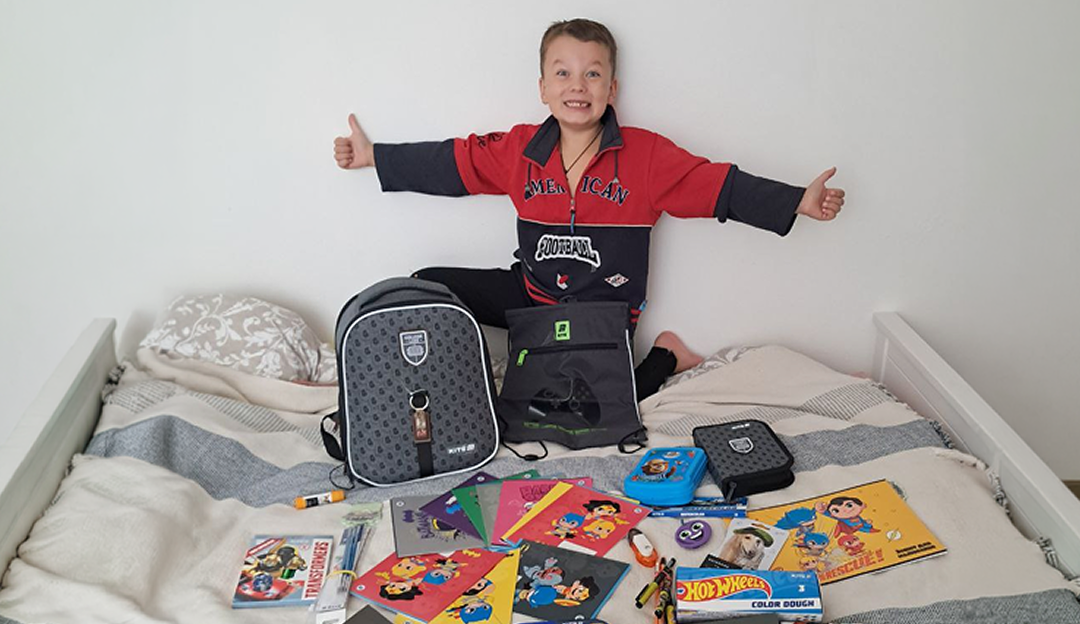
| School supply kits | 13,088 |
| Vision correction kits | 1,234 |
| Birthday gifts | 26,411 |
The Family Helpers program
The Family Helpers program is a core part of the Children of Heroes approach. From the moment a family joins the Fund, they are matched with a dedicated Family Helper – a trained specialist who understands the child’s situation, tracks their needs, and connects them with the appropriate support programs. According to the survey, 93.7% of families consider having a Family Helper to be very or fairly important.Why ongoing support is critical for Ukrainian children in 2026
Survey data shows that many families have limited capacity to cope on their own. 76% of households rely on a single adult, and 60% live on less than 17,000 UAH per month (approximately 385 USD or 328 EUR). At the same time, 70% of families still need stable humanitarian and medical support, and 22% of children have chronic illnesses. At the same time, the number of children supported by Children of Heroes continues to grow. On average, 10–20 children join the Fund each day. This means that both the scale and complexity of support continue to increase. Monthly support allows the Fund to respond to this need. Regular contributions make it possible to plan ahead and provide consistent care for thousands of children over time.Conclusion
Ukrainian children in 2026 need long-term support across psychological care, education, healthcare, and daily living needs. Survey data shows that these needs are ongoing and do not decrease over time. Many families face high living costs and unstable income, while children require continuous psychological support, access to education, and regular medical care. At the same time, the number of affected children continues to increase. Long-term support is therefore essential. Programs provided by Children of Heroes – including Family Helpers, education support, medical care, and psychological recovery – ensure that Ukrainian children receive consistent care as they grow.FAQ
Who does the Children of Heroes Charity Fund support?
The Fund provides long-term support to children in Ukraine who have lost one or both parents due to the war. As of April 2026, it supports more than 16,000 children.
What types of support does the Fund provide?
The Fund operates seven core support programs: psychological support and socialization, education and development, medical care, humanitarian aid, case management, the Family Helpers program, and holiday gifts and celebrations.
What is the Family Helpers program?
The Family Helpers program assigns a dedicated support specialist to each family when they join the Fund. This specialist builds an ongoing relationship with the child and family, identifies their needs, and connects them with relevant support programs over time. According to the survey, 93.7% of families consider having a Family Helper important.
What do families say they need most?
Based on a 2025 survey of 2,147 families, the main challenge is the high cost of food and essential goods (36.2% of respondents). The most needed support areas are psychological support and socialization, followed by education and humanitarian aid.
How is Children of Heroes funded and is it a legitimate charity?
Children of Heroes is a registered 501(c)(3) nonprofit organization in the United States (Wilmington, Delaware), with additional legal entities in Ukraine and the Netherlands. Donations from US residents are tax-deductible. The Fund holds a Platinum Seal of Transparency from Candid, an Effective Organization badge from GlobalGiving, and is a member of Eurochild.
How long does the Fund support each child?
Support continues until the child turns 18 and includes guidance into early adulthood. The Fund helps older teenagers transition to independence through mentorship, life skills programs, and continued support.
Why is monthly giving more effective than one-time donations?
Children’s needs are ongoing and change over time. Monthly donations allow the Fund to plan programs, maintain consistent support, and avoid gaps in care. This is especially important as the number of children supported continues to grow.
How transparent is the Fund about how donations are used?
The Fund publishes regular monthly and annual reports that detail financial spending and in-kind support provided to children and families. It has also been featured in international media, including The Guardian, The Telegraph, The Times, and CTV News.